

In the fast-paced world of 2026, where the boundaries between professional and personal life have become increasingly blurred, the state of our living environment has moved from a matter of aesthetics to a critical factor in psychological well-being. For the modern professional in North America and Europe, the home is no longer just a place to sleep; it is a sanctuary, a high-performance hub, and a reflection of mental state.
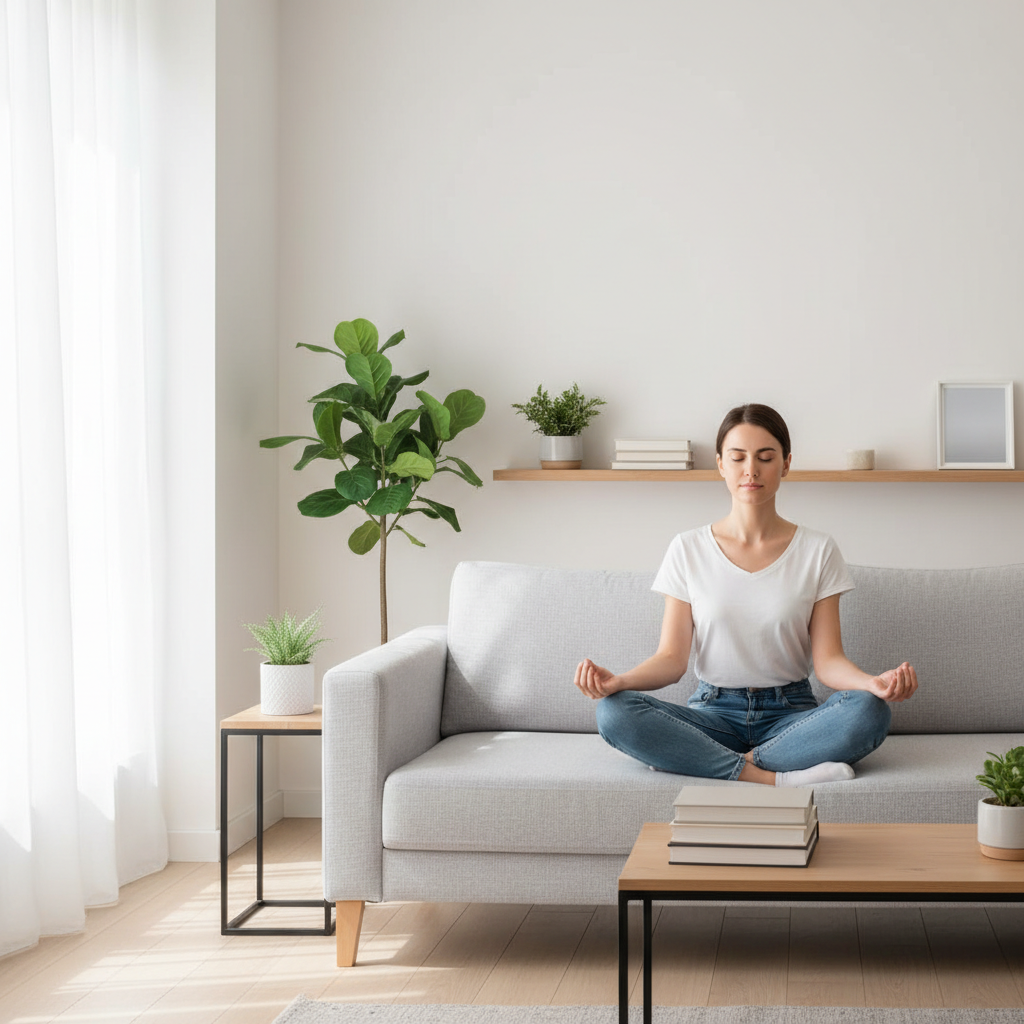
Scientific research in environmental psychology has reached a consensus: the physical space we inhabit directly dictates the cognitive resources we have available. This article explores the profound connection between deep cleaning, mental clarity, and productivity, providing a scientific roadmap for transforming your home into a catalyst for success.
The Cognitive Cost of Clutter: Why Your Brain Can’t Focus
To understand why a clean home leads to a clear mind, we must first look at the neurobiology of clutter. Our brains are wired for order. When we are surrounded by visual disarray—piles of laundry, dusty surfaces, or disorganized workspaces—our visual cortex is constantly processing “irrelevant stimuli.”
A landmark study from the Princeton University Neuroscience Institute found that multiple stimuli present in the visual field at the same time compete for neural representation. In simpler terms, clutter acts as a “visual noise” that drains your mental energy, making it harder to focus and process information efficiently. In 2026, with the added cognitive load of digital notifications and AI-driven workflows, reducing physical noise through deep cleaning is no longer optional—it is a prerequisite for deep work.
Deep Cleaning vs. Surface Tidying: The Psychological Difference
While surface tidying provides temporary relief, Deep Cleaning offers a profound psychological “reset.” Surface cleaning removes what we see; deep cleaning removes what we know is there.
The “Subconscious Weight” of Hidden Dirt
Deep cleaning addresses the areas often neglected: the air filters, the space behind the appliances, and the microscopic allergens in the carpets. Psychologically, knowing that your environment is truly sanitized at a foundational level reduces “subconscious anxiety.” In 2026, air quality monitoring has become a standard feature in premium homes, and the data is clear: lower particulate matter leads to better sleep and higher cognitive function the following day.
The Ritual of Renewal
The act of deep cleaning is, in itself, a ritual of renewal. It signals to the brain that a new phase is beginning. This is why many high-achievers in New York, Toronto, and Warsaw schedule professional deep cleanings before starting major projects. It creates a “blank slate” that fosters creativity and reduces the friction of starting new tasks.
The Productivity Dividend: How a Clean Home Fuels Your Career
Productivity in 2026 is measured by the ability to sustain high-intensity focus. A perfectly maintained home contributes to this in three distinct ways:
1. Reduced Decision Fatigue
Every item out of place requires a micro-decision: “Should I move this? Where does it go? When will I clean it?” These micro-decisions accumulate, leading to decision fatigue before you even start your workday. A deep-cleaned and organized home eliminates these distractions, preserving your “executive function” for high-value professional tasks.
2. The “Halo Effect” of Order
Success in one area of life tends to bleed into others. When you master your environment through a rigorous home care routine, you reinforce a self-image of discipline and control. This “Halo Effect” boosts confidence in professional negotiations and complex problem-solving.
3. Optimized Physical Health
You cannot be productive if you are physically compromised. Deep cleaning significantly reduces indoor pollutants, mold spores, and dust mites. In the temperate climates of Canada and Northern Europe, where we spend up to 90% of our time indoors during winter, the impact of air quality on brain fog and lethargy is immense. A healthy home is the foundation of a high-performance body.
Implementing the “Sparkling Home” Protocol in 2026
Achieving this level of environmental excellence requires a strategic approach. Here is the protocol recommended for the sparklinghomecare.com audience:
Phase 1: The Seasonal Deep Reset
Every quarter, perform a “top-to-bottom” sanitization. This includes professional-grade steam cleaning of upholstery, HVAC duct purification, and high-intensity disinfection of high-touch surfaces.
Phase 2: The Weekly Maintenance Loop
Establish a routine that prevents the accumulation of “visual noise.” Focus on high-impact areas: the kitchen, the primary workspace, and the bathroom. In 2026, many professionals use AI-driven scheduling to ensure these tasks are handled by premium services without manual intervention.
Phase 3: The Daily “Zero-State”
Before ending your day, return your primary living spaces to a “Zero-State”—everything in its place, surfaces wiped, and air purifiers optimized. This ensures that when you wake up, your first visual input is one of order and possibility, not tasks left undone.
Investing in Your Environment is Investing in Yourself
In 2026, the most successful individuals recognize that their home is an extension of their mind. Deep cleaning is not a chore; it is a high-yield investment in your cognitive health and professional longevity. By maintaining a “Sparkling Home,” you are not just cleaning a building—you are optimizing the most important tool you own: your brain.
The science is clear. The benefits are measurable. The road to peak productivity starts with a clean home.
About the Author: Pedro Neto is a freelancer and enthusiast of practical daily solutions. With a keen eye for efficiency and organization, Pedro shares at sparklinghomecare.com the best strategies and techniques to transform home maintenance into a pillar of well-being and success.
Disclaimer: The information in this article is for educational purposes only. While a clean home supports mental health, it is not a substitute for professional psychological or medical advice.