
1. Introduction: From Construction Site to Sanctuary
The completion of a high-end renovation or the construction of a new custom estate is a milestone worth celebrating. After months of architectural planning, design consultations, and construction noise, the vision of your dream home has finally materialized. However, as the contractors pack their tools and the heavy machinery leaves the driveway, a new and formidable challenge emerges: the aftermath of the build. For owners of luxury assets, the transition from a finished project to a livable sanctuary is often hindered by a pervasive, fine layer of debris that covers every square inch of the property.
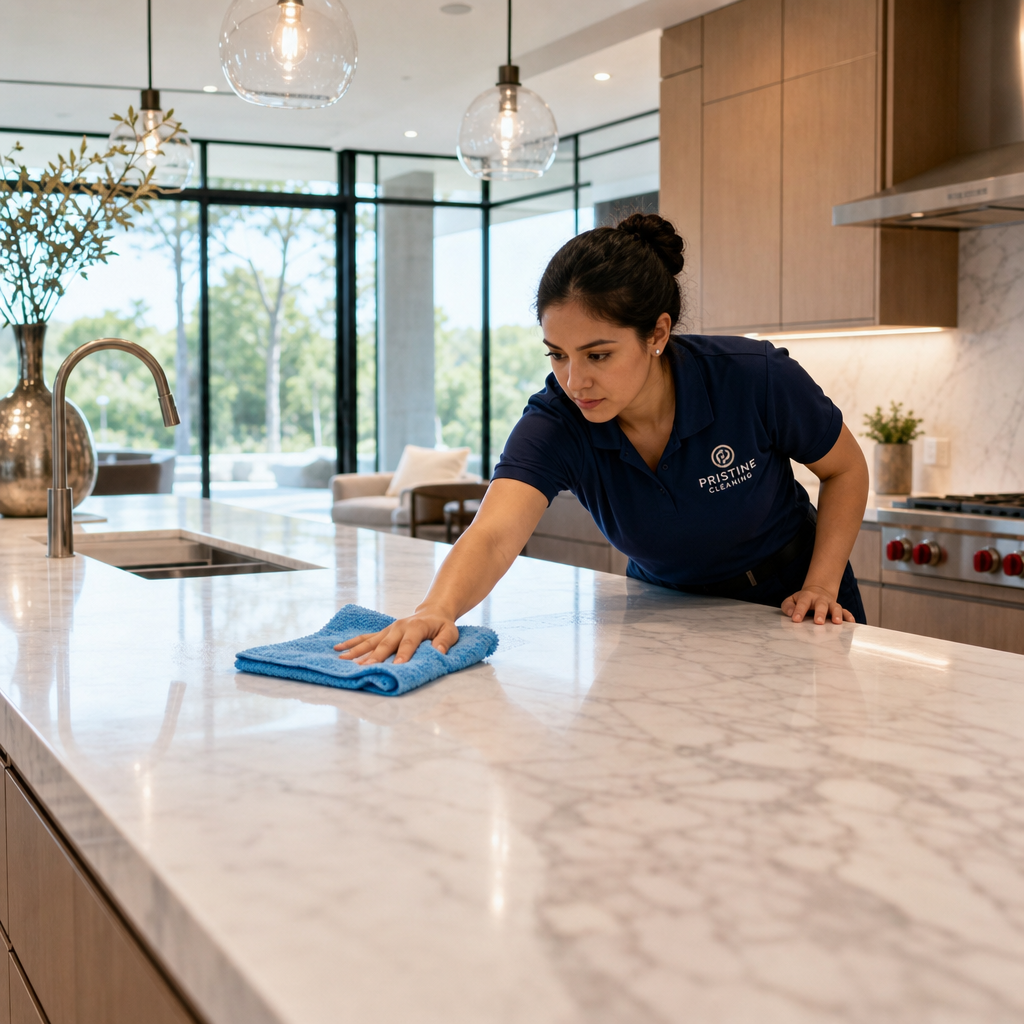
Post-construction debris is not merely “dirt” in the traditional sense. It is a complex mixture of drywall dust, sawdust, masonry particulates, adhesive residues, and chemical off-gassing from new materials. In a luxury environment—where bespoke cabinetry, exotic stone surfaces, and delicate light fixtures are the standard—standard cleaning methods are not only insufficient but potentially damaging. This is why post construction cleaning services are considered a non-negotiable final phase of the construction process. A professional move-in cleaning ensures that your investment is protected and that the air you breathe is safe from the microscopic hazards left behind by the building process.
Whether you are moving into a penthouse in New York or a sprawling estate in Toronto, the goal remains the same: an uncompromising level of cleanliness that reflects the quality of the build. If you are also managing corporate transitions, you may find our The Ultimate Guide to Commercial Office Cleaning useful for maintaining professional standards in your workspace. For residential owners, however, the focus is on the intimate details that turn a house into a home. If you are transitioning from an old property, don’t forget to consult our Move-Out Cleaning Guide: Secure Your Deposit to ensure a seamless exit.
2. The Science of Construction Dust: Why HEPA Matters
To understand the necessity of luxury home deep cleaning, one must understand the nature of construction dust. Unlike household dust, which is primarily composed of organic matter, construction dust is abrasive and chemically complex. One of the most dangerous components is crystalline silica, a byproduct of cutting stone, brick, and concrete. These particulates are often smaller than 2.5 microns—invisible to the naked eye but small enough to penetrate deep into the lungs and settle into the most intricate crevices of your home.
Standard household vacuums, even high-end consumer models, often lack the filtration necessary to trap these fine particles. Instead, they exhaust the dust back into the air, creating a cycle of re-contamination. This is where HEPA filtration cleaning becomes essential. A True HEPA filter is designed to capture 99.97% of particles as small as 0.3 microns. In a post-construction setting, industrial-grade HEPA vacuums are used not just on floors, but on walls, ceilings, and inside cabinetry to ensure fine dust removal after renovation is absolute.
Furthermore, the “settling” period of construction dust can last for weeks. As the home’s HVAC system cycles, dust trapped in the ducts is redistributed. A scientific approach to cleaning involves multiple passes: an initial “rough clean” to remove large debris, a “deep clean” to address the microscopic layer, and a “final touch” to remove the dust that inevitably settles 48 to 72 hours later.
3. Room-by-Room Deep Cleaning Guide
A luxury home requires a systematic, room-by-room approach. Each area presents unique challenges and requires specific technical protocols to ensure a pristine result.
3.1 The Kitchen: The Heart of the Home
The kitchen is often the most complex area to clean due to the variety of surfaces and the presence of high-end appliances. Post construction cleaning services must pay special attention to:
- Cabinetry (Inside and Out): Dust migrates into closed drawers and cabinets through the smallest gaps. Every shelf, hinge, and drawer track must be vacuumed with a HEPA attachment and wiped with a damp microfiber cloth.
- High-End Appliances: Sub-Zero, Wolf, and Miele appliances require specialized care. Protective films must be removed carefully to avoid adhesive residue. Stainless steel surfaces must be polished following the grain of the metal.
- Polished Surfaces and Backsplashes: Whether it is a custom slab of Calacatta marble or a hand-tiled backsplash, these surfaces must be cleaned of grout haze and construction adhesive without using acidic cleaners that could etch the stone.
- Under-Appliance Cleaning: Dust accumulates under heavy ranges and refrigerators. These must be carefully moved (using floor protection) to ensure no hidden debris remains.
3.2 Bathrooms: Sanitization and Detail
In a luxury bathroom, the focus is on removing “grout haze”—the cloudy residue left behind after tiling—and ensuring every fixture is spot-free.
- Grout and Tile: Specialized pH-neutral cleaners are used to remove haze from porcelain or natural stone tiles.
- Chrome and Brass Fixtures: High-end fixtures from brands like Brizo or Kohler are susceptible to scratching. Only non-abrasive, soft cloths should be used to restore their mirror-like finish.
- Sanitization: Beyond dust removal, all toilets, tubs, and showers must be fully sanitized to remove any chemical residues from the installation process.
- Mirrors and Glass: Construction dust can be abrasive; mirrors must be dusted before being cleaned with a liquid solution to prevent micro-scratches. For exterior glass and complex architectural windows, refer to our guide on Professional Window Cleaning: Pure Water Technology.
3.3 Living Areas and Bedrooms
These areas often feature expansive walls, intricate moldings, and custom lighting that act as “dust magnets.”
- Walls and Ceilings: It is a common mistake to only clean the floors. In a luxury home deep cleaning, walls are vacuumed from top to bottom using soft brush attachments to remove static-bonded dust.
- Baseboards and Crown Molding: These architectural details have ledges where dust settles heavily. They require hand-wiping to ensure a crisp, clean look.
- Light Fixtures and Chandeliers: Swarovski crystals or custom glass pendants must be individually cleaned. Construction dust can dim the brilliance of high-end lighting if not meticulously removed.
3.4 Specialized Areas: The Luxury Extras
Luxury estates often include bespoke rooms that require specialized knowledge:
- Wine Cellars: Dust can interfere with climate control sensors. Racks and cooling units must be cleaned without introducing strong chemical odors that could permeate corks.
- Home Theaters: Acoustic panels and high-end projection screens are extremely delicate. Vacuuming must be done with extreme care to avoid damaging the fabric or the lens.
- Home Gyms: Rubberized flooring or specialized turf requires deep extraction to remove the “new rubber” smell and any construction particulates trapped in the texture.
4. Protecting High-End Materials
The hallmark of a luxury home is the use of premium, often porous, materials. Using the wrong cleaning agent can cause permanent damage that is costly to repair. Professional move-in cleaning teams are trained to identify materials and apply the correct chemistry.
- Hardwood Floors: Whether it is wide-plank European Oak or reclaimed Walnut, wood floors should never be “wet mopped” after construction. Excessive water can cause planks to swell. Instead, they are treated with specialized wood cleaners and microfiber systems that lift dust without saturating the grain.
- Quartzite and Marble: These stones are highly sensitive to pH levels. Acidic cleaners (like vinegar) can cause etching, while heavy soaps can leave a dulling film. Only pH-neutral, stone-specific cleaners should be used.
- Custom Cabinetry: High-gloss or matte lacquered finishes are easily scratched. The use of fine dust removal after renovation techniques—such as air-blasting crevices followed by soft-wiping—is essential to maintain the factory finish.
For those committed to maintaining a healthy home environment without harsh chemicals, our Green Cleaning 101: Eco-Friendly Services provides insights into sustainable practices that protect both your surfaces and your family’s health.
5. HVAC and Air Quality: The Invisible Priority
Perhaps the most critical step in post construction cleaning services is addressing the air quality. During construction, the HVAC system often pulls in dust-laden air. If the ducts are not cleaned and filters are not replaced, the home will never truly be clean, as the system will blow dust onto freshly cleaned surfaces every time it engages.
- Duct Cleaning: Professional duct agitation and vacuuming remove the “reservoir” of dust hidden behind the vents.
- Filter Replacement: All construction-phase filters must be discarded. We recommend replacing them with high-MERV rated filters to continue capturing any lingering particulates during the first month of occupancy.
- Vent Covers: Each register and return-air vent should be removed, cleaned, and reinstalled to ensure no debris is trapped in the grates.
6. Common Pitfalls in Post-Construction Cleaning
Many homeowners or general cleaners fall into traps that can compromise the final result or damage the property:
- Using the Wrong Vacuum: A shop-vac without a HEPA filter will simply atomize the dust, making the problem worse.
- Scratching Surfaces: Wiping a dusty surface with a dry cloth acts like sandpaper. Surfaces must be vacuumed or “tack-clothed” before wiping.
- Neglecting Hidden Areas: Failing to clean the tops of door frames, the inside of light switches, or the tracks of sliding glass doors allows dust to redistribute later.
- Rushing the Process: Construction dust settles in waves. A single cleaning pass is rarely enough for a luxury move-in standard.
7. Why Hire Professionals for Your Luxury Move-In?
Hiring a specialized team for professional move-in cleaning is an investment in peace of mind. Beyond the technical expertise, professional services provide:
- Insurance and Liability: Luxury homes feature items that are irreplaceable. Professional companies carry comprehensive insurance to protect against accidental damage to high-value finishes.
- Specialized Equipment: From industrial steam cleaners to telescopic HEPA vacuums, professionals have the tools to reach every corner of a 10,000-square-foot estate.
- Time Efficiency: What would take a homeowner weeks to clean can be accomplished by a coordinated team in a matter of days, allowing you to meet your move-in deadline without stress.
8. Conclusion: The Final Touch
A luxury home is more than just a structure; it is a curated experience. The final step of that experience is ensuring that every surface is pristine, every room is sanitized, and the air is pure. By following a rigorous post construction cleaning checklist and utilizing HEPA filtration cleaning, you ensure that your first night in your new home is defined by comfort and elegance, not by the lingering remnants of a construction site.
At Sparkling Home Care, we understand the nuances of luxury properties in the US and Canada. Our commitment to fine dust removal after renovation and our specialized post construction cleaning services ensure that your move-in is as flawless as your home’s design. Welcome home to a space that is truly, deeply clean.
Sobre o Autor (About the Author): Pedro Neto is a specialized freelancer and content strategist for the cleaning and facility management industry. With a focus on high-end residential services, he helps homeowners and professionals implement efficient, high-standard maintenance protocols.
Disclaimer: The information provided in this article is for educational purposes only. While we strive for accuracy, Sparkling Home Care recommends consulting with professional cleaners for specialized surfaces and high-value materials to avoid accidental damage.